7 Costly Mistakes Nowra Homeowners Make When Ordering Landscape Supplies (And How To Avoid Them)
Table of Contents
- The Short Answer: Most Mistakes Come Down to Quantity, Depth and Access
- Mistake 1: Buying Bags When You Need Bulk
- Mistake 2: Confusing Cubic Metres and Tonnes
- Mistake 3: Guessing the Depth
- Mistake 4: Choosing the Wrong Material for the Job
- Mistake 5: Picking a Mulch That Won't Stay Put on an Exposed Nowra Block
- Mistake 6: Skipping Edging and Losing Half Your Materials to the Lawn
- Mistake 7: Not Thinking About Access
- How to Get Your Quantities Right Before You Order
- FAQs
- Call the Nowra Yard With Your Measurements
Most landscape supply mistakes come down to three things: ordering the wrong quantity, choosing the wrong material for the conditions, and not thinking about where the delivery is actually going to go. After more than 30 years selling
landscape supplies in Nowra, the BVN team sees the same mistakes at the counter and on the phone every week — and almost all of them are avoidable with a two-minute conversation before the order is placed.
The Short Answer: Most Mistakes Come Down to Quantity, Depth and Access
If you measure your area, know the depth you need, and have thought about where a truck can tip, you are already ahead of most first-time bulk buyers.
For a single raised bed or a couple of large pots, bagged product from a hardware store is genuinely fine. Bulk delivery is not worth it for that scale — and saying so is the honest answer.
The equation changes quickly as volume increases. Once you are looking at more than roughly one cubic metre — about ten to fifteen standard 70-litre bags — bulk delivery almost always works out cheaper per cubic metre, and you get a single delivery rather than multiple trips. For anything involving a longer garden bed, a lawn top-dress, or a driveway, bulk is the practical and cost-effective choice.
Mistake 2: Confusing Cubic Metres and Tonnes
This is the mistake that causes the most confusion, because different materials are sold by different measures and the relationship between volume and weight varies enormously
- Mulch is light and bulky — a cubic metre weighs roughly 300 to 500kg depending on the type
- Topsoil and garden mix are heavier — a cubic metre typically weighs around 900kg to 1.1 tonnes
- Road base, gravel and washed sand are dense — a cubic metre can weigh 1.4 to 1.6 tonnes
The practical implication: a tonne of mulch covers a large area. A tonne of gravel covers a much smaller one. Ordering by weight without knowing the material's density is a reliable way to get the wrong quantity. When you call to order, give your measurements in length, width and depth — the yard works back to cubic metres from there.
Mistake 3: Guessing the Depth
Depth is the single biggest variable in landscape supply calculations, and the one most homeowners guess rather than measure. The consequences go both ways — too thin and mulch blows away and fails to suppress weeds; too thick and you are buying material that provides no additional benefit.
The volume calculation is straightforward: length (m) × width (m) × depth (m) = cubic metres.
Typical depths to work from:
- Organic mulch for garden beds: 50–75mm. Below 50mm it does not work; above 100mm offers no additional benefit
- Topsoil or garden mix for new beds: 100–150mm minimum
- Turf underlay: 75–100mm of quality topsoil
- Washed sand under pavers: 30–40mm compacted
Measure the area, apply the right depth for the application, multiply — and you have a number to work with before you call.
Mistake 4: Choosing the Wrong Material for the Job
The most common version of this mistake is laying decorative pebbles or gravel on a driveway without compacting road base underneath first. Decorative gravel is not structural — it shifts under vehicle weight, creates ruts and potholes, and ends up on the lawn within a season.
A driveway needs compacted road base as its foundation. Decorative gravel, if used at all on a driveway surface, goes on top. Knowing which material is doing which job before you order saves both money and a second delivery.
If you are still deciding between soil, gravel and pebbles for your project, our guide to
choosing the right landscape supplies breaks down what each material is actually built for.
Mistake 5: Picking a Mulch That Won't Stay Put on an Exposed Nowra Block
The Shoalhaven coast gets onshore wind, and heavy summer downpours can move lightweight mulch off a garden bed entirely. Fine, light mulches — including some shredded sugar cane products and fine wood chip — are the worst performers on exposed blocks. They are light enough to blow and float.
Chunky bark mulch and heavier wood chip hold significantly better. The larger particle size means wind has less effect, and water passes through rather than carrying the mulch with it. Mulch that moves also tends to take garden soil with it, which compounds the problem.
We covered this in more detail in our guide on materials for coastal and bushland properties around Nowra.
Mistake 6: Skipping Edging and Losing Half Your Materials to the Lawn
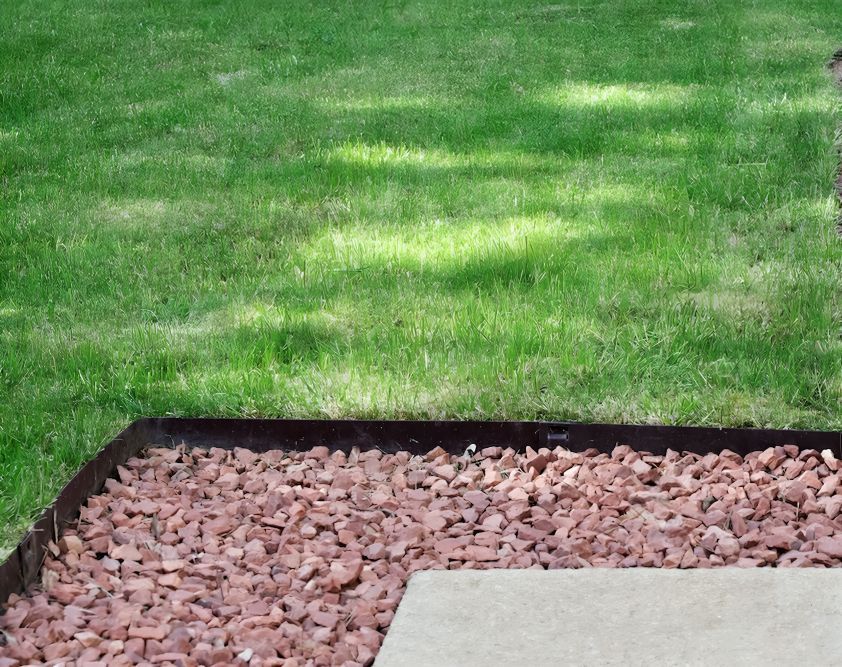
Gravel and mulch do not stay where you put them without a physical barrier. Without edging, mulch migrates into lawns, gravel spreads across paths, and within one season the defined garden beds you installed look ragged and incomplete.
Installing metal garden edging before the mulch or gravel goes down is the cheapest way to protect the investment in materials. The mistake is almost always sequencing — people put the mulch down first and plan to add edging later. The edging never goes in, and the mulch is half gone by summer's end.
Mistake 7: Not Thinking About Access
A bulk delivery arrives on a truck that needs somewhere to tip. Assumptions about access are one of the most common sources of problems on delivery day:
- Can the truck get through the front gate or down the driveway?
- Is there a side gate the truck or a mini loader can fit through?
- If the tip point is on the street, how far is the material from where it needs to go?
- For a large volume spread, is a wheelbarrow and a weekend realistic — or does the job need machinery?
BVN also hires mini loaders, mini excavators and trucks. For a cubic metre or two into an accessible garden, a wheelbarrow works fine. For ten cubic metres across a large property, hire gear rather than lose multiple weekends to manual labour.
How to Get Your Quantities Right Before You Order
The process is straightforward:
- Measure the length and width of the area in metres
- Decide on the depth based on the application
- Multiply length × width × depth to get cubic metres
- Call the yard with that number and the material type — quantities can be adjusted at the point of ordering
BVN sells in bulk from the Nowra yard with same-day service and delivers across the Shoalhaven and South Coast, including Ulladulla, Sussex Inlet, St Georges Basin, Vincentia and Berry.
FAQs
Call the Nowra Yard With Your Measurements
The fastest way to get the right quantity is to call before you order. No need to have everything perfectly calculated — describe the job and the area and the team will work through the quantities with you.
For quality landscape supplies in Nowra and delivery across the Shoalhaven and South Coast, call BVN Landscape Supplies on (02) 4443 5022. A two-minute conversation usually saves a wasted delivery.